How to Digitise an Older Factory Without Replacing Everything
The fear that going digital means ripping out everything that works is why so many factories stay on paper. It doesn't, and here's the alternative.
6 min read • 23 Aug 2026
Why Spreadsheets Fail Once Your Factory Gets Busy
6 min read • 23 Aug 2026The real barrier isn't technology, it's the rebuild fear
India's manufacturers are digitizing quickly, and the market for it is growing fast. But the older factories, the ones that have run profitably for a decade or more, carry a quiet fear that keeps them on paper: that going digital means tearing out machines and processes that work perfectly well today.
That fear is reasonable. It's also mostly wrong, and it's costing those factories the visibility their newer competitors already have.
When digitalization stalls at an established plant, the reason is rarely that the technology can't do it. It's that the owner pictures a rip-and-replace: new machines, retrained staff, months of disruption, and a large cheque, all before anything improves.
Framed that way, standing still looks safer. So the tally book and the WhatsApp group survive another year. The barrier is the picture in the owner's head, and the fix starts by changing that picture.
Legacy and manual are two different problems
Part of the confusion is treating one problem as two, or two as one. There's manual work, the processes run on paper and in people's heads. And there's legacy, the older machines and systems already in place. They need different answers.
Manual processes get digitized, moved from paper into software that captures and shows the work. Legacy machines get connected, read and wired into that software without being replaced. Muddle the two and every project sounds like "replace the factory." Separate them and most of the work turns out to be adding visibility, not tearing anything out.
Most of digitising an older factory is adding sight to what you already run, not replacing it.
You can connect old machines without replacing them
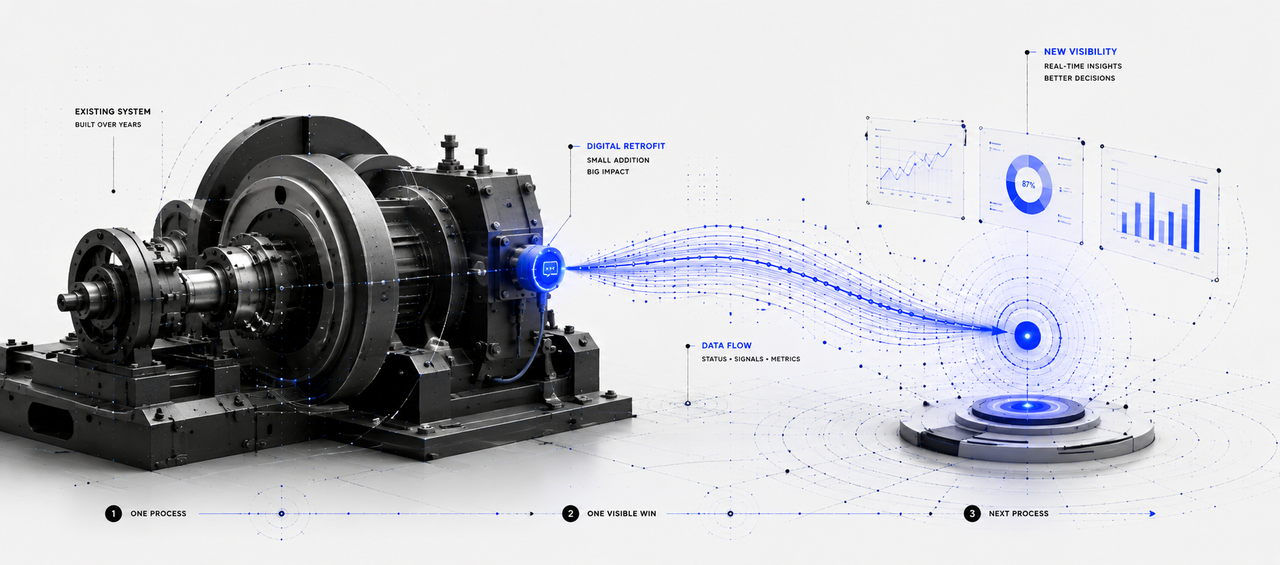
This is the part owners rarely believe until they see it. An older machine doesn't need to be swapped to become visible. Its status can be read and pulled into a digital system through low-cost additions, so the data it was already producing stops evaporating and starts showing up on a screen.
The machine keeps doing its job. What changes is that you can now see what it's doing, in real time, alongside everything else. That's the bulk of the benefit, with almost none of the disruption the rip-and-replace picture assumed.
Phased beats big-bang
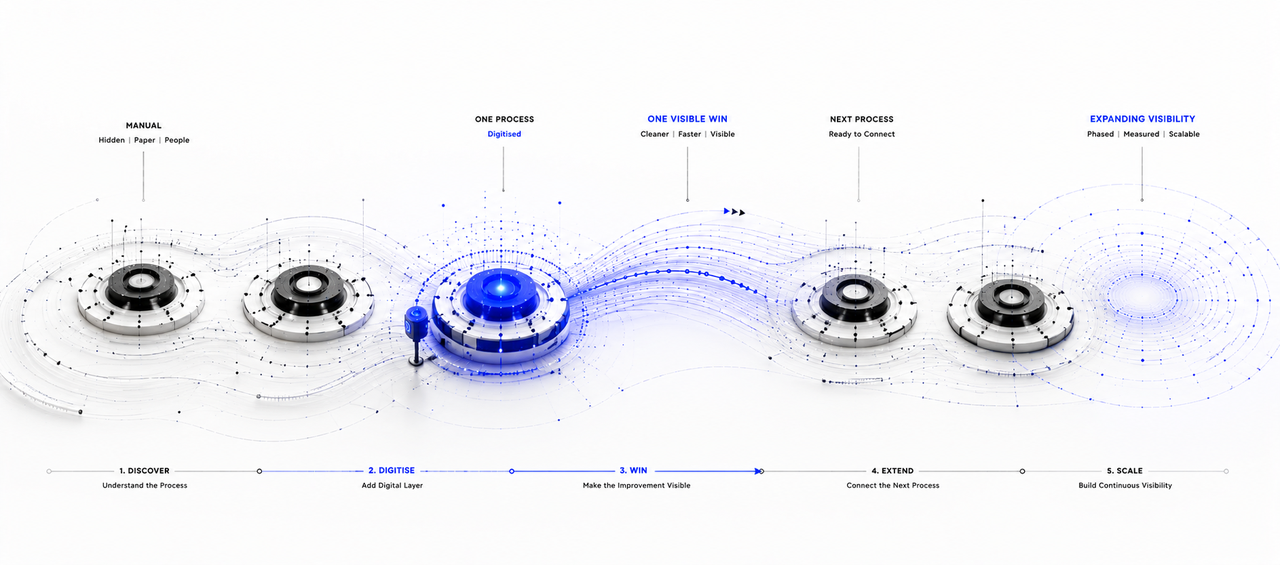
The safe path is the phased one. One process, one part of the plant, one visible win, then the next. Each step is small enough to absorb without disrupting production, and each proves the value before the next is committed.
That's the opposite of the all-at-once project the owner was dreading, and it's far more likely to actually finish. If digitizing your factory sounds like betting the plant on a single big rebuild, you've been sold the wrong plan. The right one leaves what works alone and adds sight one process at a time.