How to Digitise One Factory Process in 45 Days
Most factory digitalization projects die in the planning phase. The way through is narrow and fast: fix the process that's bleeding, in 45 days, then earn the next step.
6 min read • 23 Aug 2026
How to Digitise an Older Factory Without Replacing Everything
6 min read • 23 Aug 2026Why big-bang digitalization stalls
Every factory digitalization pitch opens with a two-year roadmap and a diagram full of boxes. Most of them never reach the end of year one. The plan is too big, the budget too frightening, the disruption too real, so it stalls in a committee while the shop floor keeps running on paper and a tally book. The problem is rarely the technology. It's the size of the first bite.
The barriers are consistent across mid-size manufacturers. The upfront cost feels enormous. The new software has to somehow talk to machines older than some of the staff. And nobody on the floor asked for it.
Any one of those slows a project. All three at once, aimed at the whole plant, kill it. The rip-and-replace dream dies on contact with a running factory that can't afford to stop.
Start with the workflow, not the software
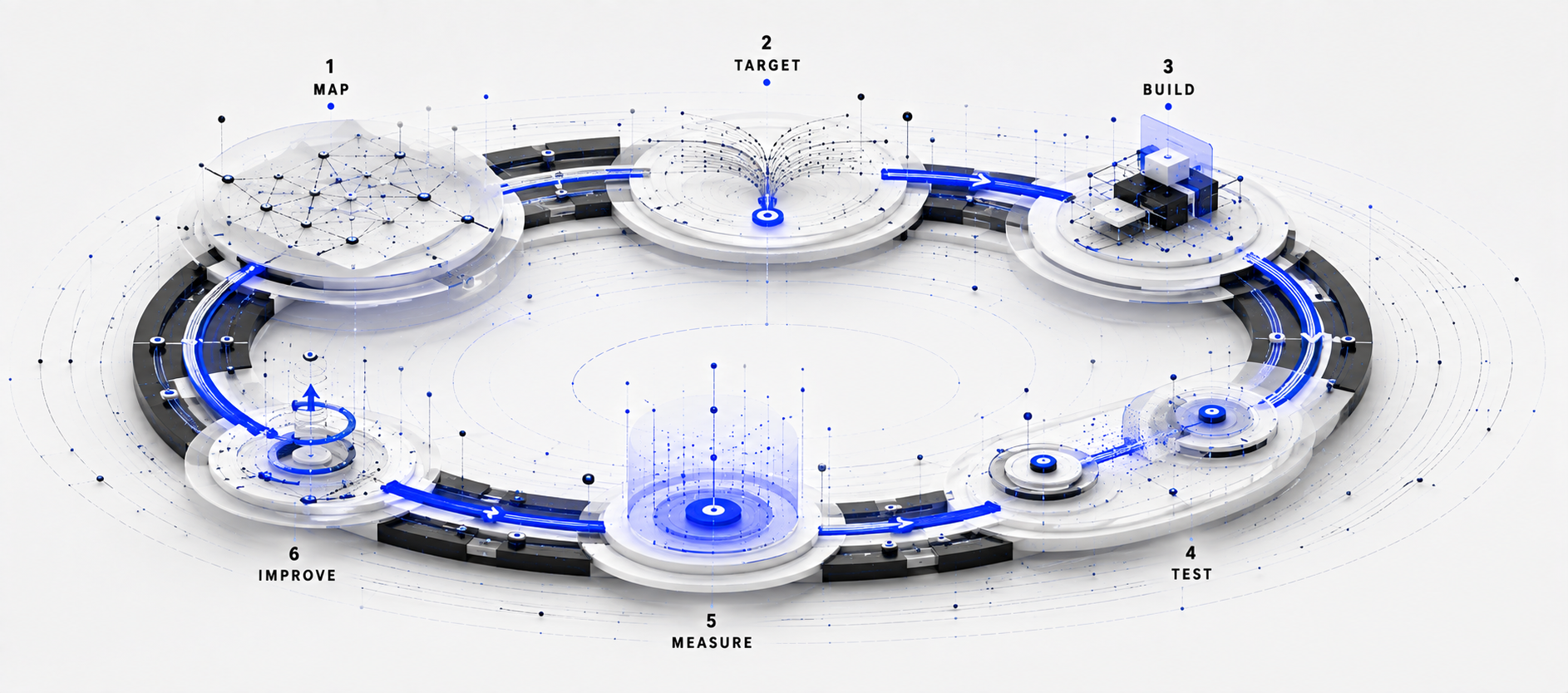
So we start somewhere smaller and less glamorous: the actual workflow. Before any tool gets chosen, map how work really moves through the plant. Where it waits. Where information goes missing. Where someone keys the same number in for the third time.
The software question comes after, because you can't digitise a process you haven't understood. Most stalled projects skipped this step to get to the demo faster, and the demo is exactly where they stalled.
You can't digitise a process you haven't mapped. Most failed projects skipped straight to the software.
45 days, one bleeding process
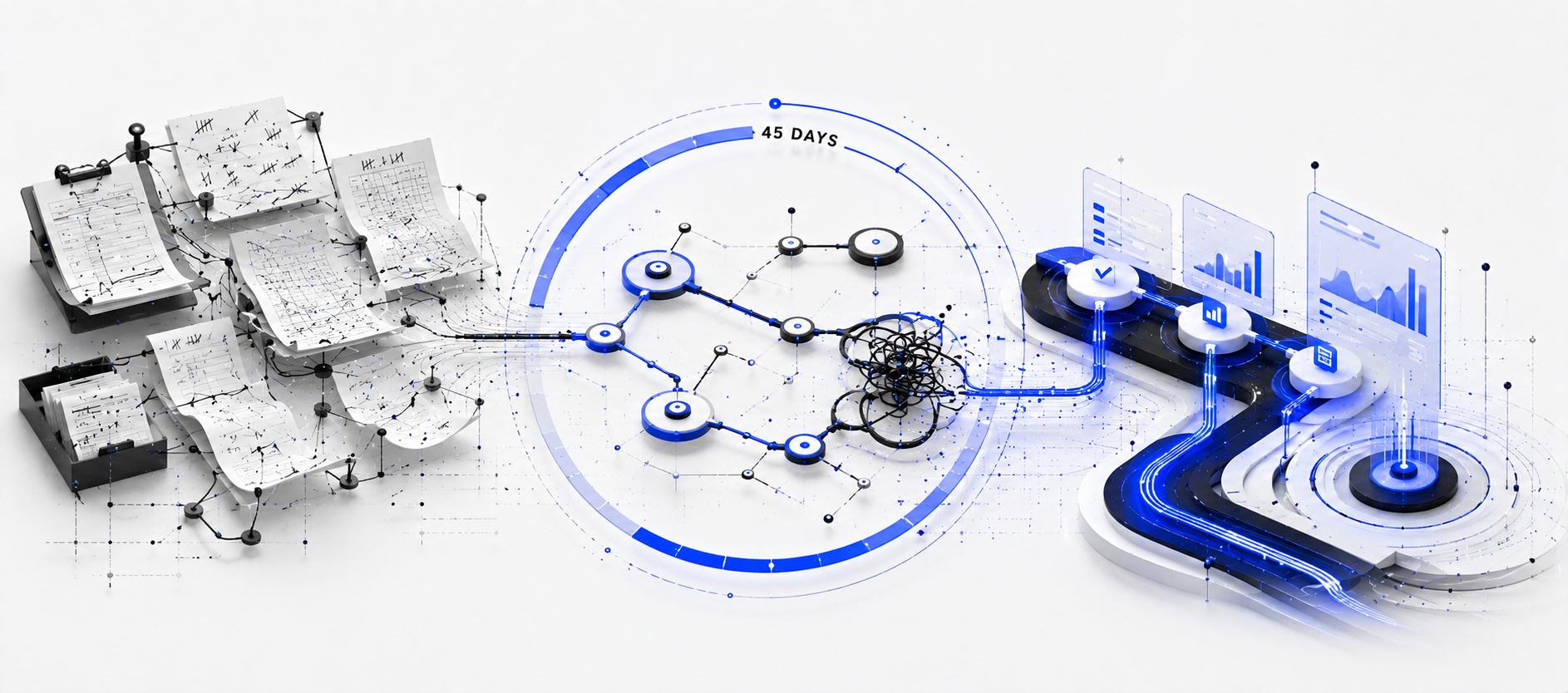
Then pick one process that's visibly costing money, and fix that, in 45 days. Not the whole plant. One workflow, mapped, digitised, and running, alongside the legacy machines and manual steps it has to live with.
Forty-five days is short enough to stay funded and focused, and long enough to ship something real. The constraint is the feature. It forces the scope down to what actually matters, which is the discipline most big programs never impose on themselves.
Make the first win visible
The last part matters more than it sounds. The first digitised process has to produce a win everyone can see. A report that used to take a day, appearing in real time. A defect caught before cutting. A number the owner can finally trust.
A visible win buys the next 45 days. That's how digitalization actually happens inside a working factory, one earned step at a time, not one heroic leap. Start with the process that's bleeding. Fix it fast. Let the result argue for what comes next.