Why Spreadsheets Fail Once Your Factory Gets Busy
The spreadsheet everyone trusts is the same one that misses ship dates. Here's where it breaks, and what a real planning system does differently.
6 min read • 23 Aug 2026
What Factory Digitalization Costs and When It Pays Off
6 min read • 23 Aug 2026The spreadsheet works until the day it doesn't
Walk into most mid-size factories and the production plan lives in one Excel file. It has grown for years, it has tabs nobody remembers the purpose of, and one person truly understands it. It works, right up until the day it very expensively doesn't.
Excel isn't a bad tool. It's a brilliant one, aimed at the wrong job. Production planning is the wrong job.
Excel earns its place because it's familiar and flexible. Anyone can open it, anyone can add a row. That same flexibility is the problem once the plant gets busy.
A spreadsheet only ever shows the last thing someone typed into it. When an order's status changes on the floor, nobody else knows until a person updates the cell, often hours later. Your planner, your sales team, and your floor are each working from a slightly different version of the truth. On a quiet week that's a nuisance. In a full order book, it's how promises get made against capacity that no longer exists.
A schedule is not a plan
Here's the deeper issue. A spreadsheet holds a list of dates. A plan understands what depends on what.
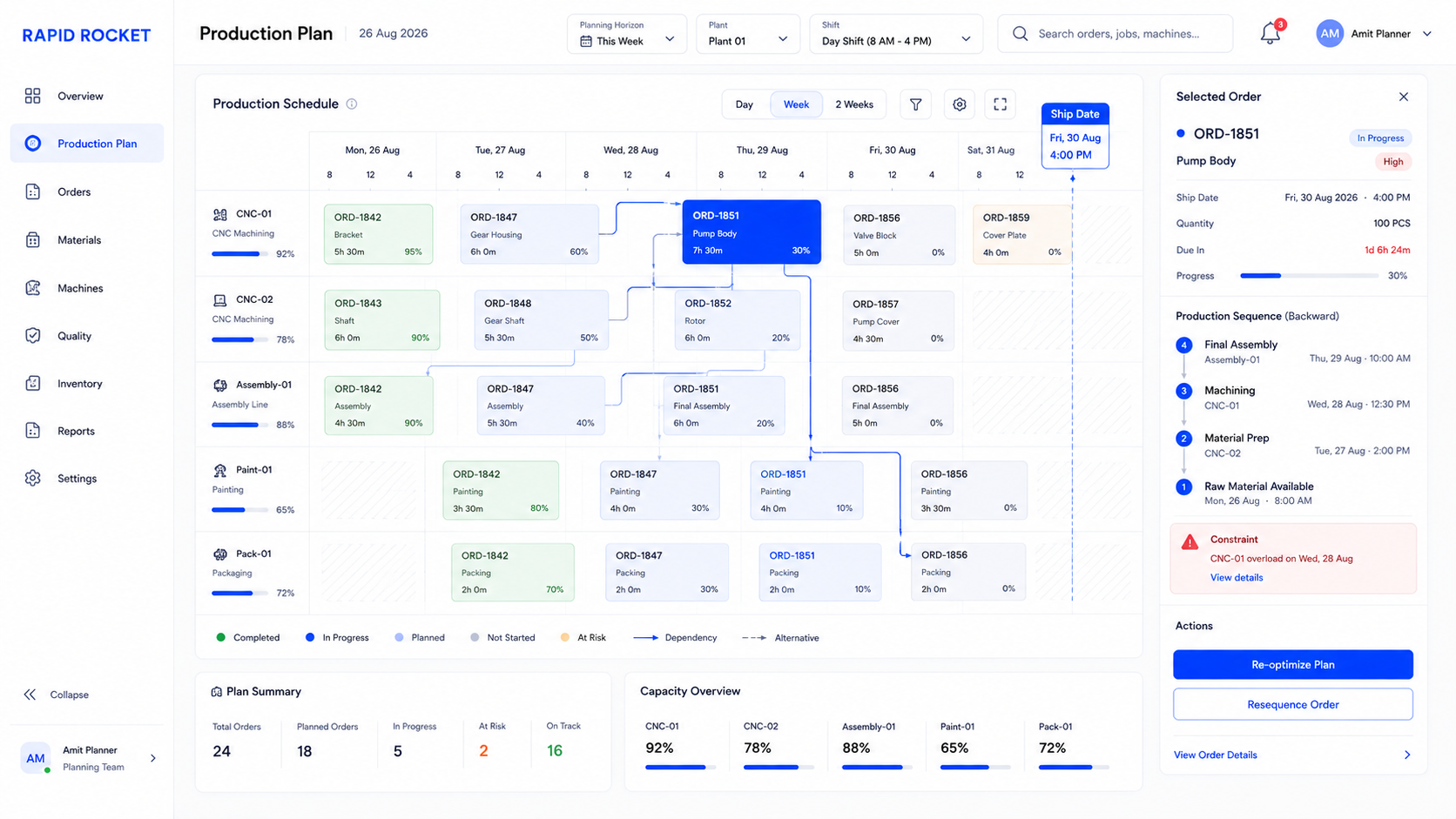
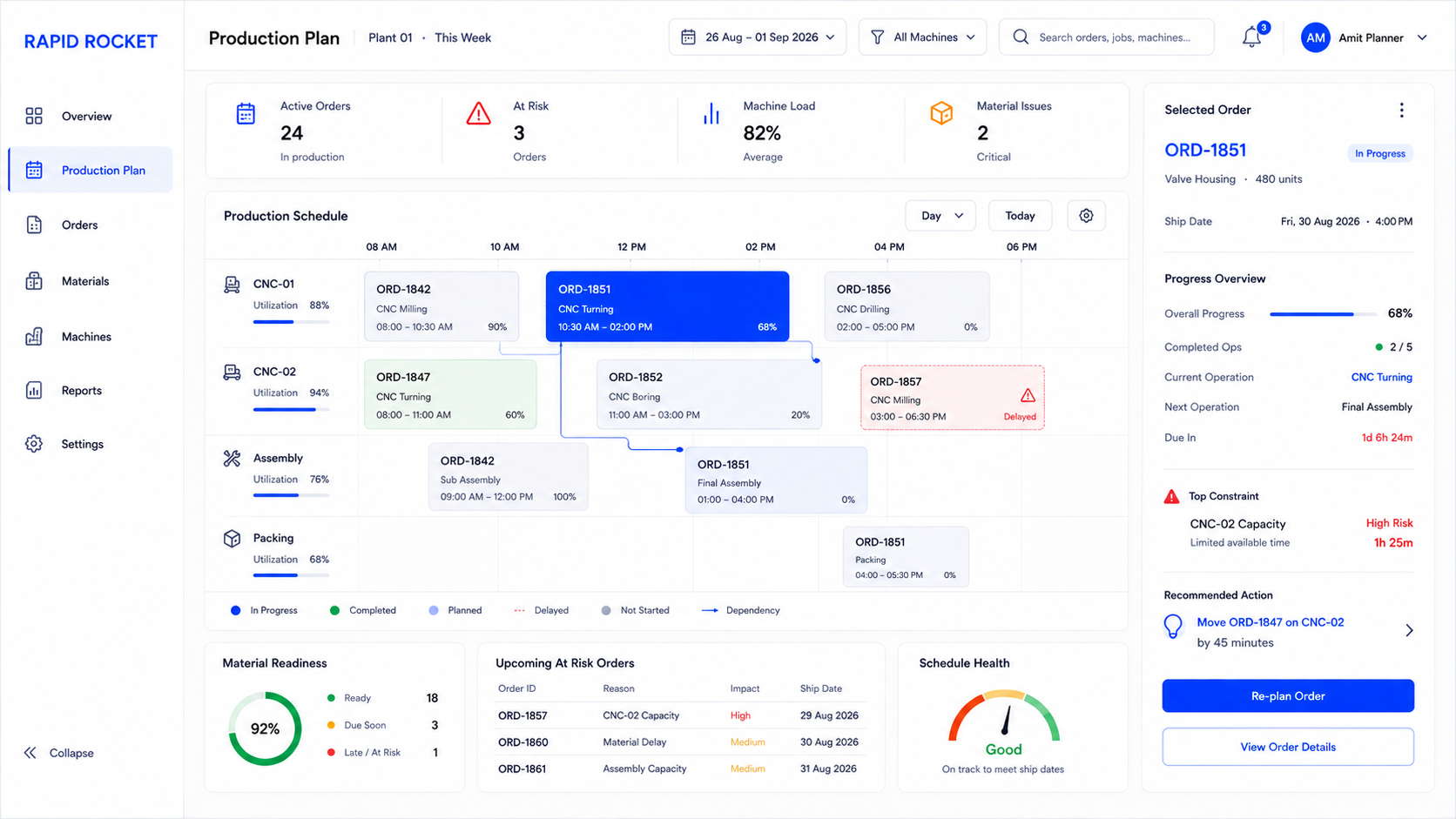
Production is a chain of dependencies. This can't start until that material arrives. This machine can't run two jobs at once. This order has to ship by a date, which means it has to reach each stage by an earlier date. Excel can display those dates. It can't reason about them. So when one input slips, a real planning system re-flows every downstream date automatically, and the spreadsheet just sits there showing you the old plan with a straight face.
Excel shows you the plan you typed. It can't show you the plan reality just changed to.
Quality gates belong in the plan, not after it
The other thing a spreadsheet quietly drops is quality. In a lot of manufacturing, certain checks have to happen before a stage can begin, not caught at the end when the material is already cut and the money already spent.
A real planning system treats those checks as gates. A stage can't move forward until its check is passed and the evidence is logged. In a spreadsheet, that discipline depends on a person remembering to remember. Under deadline pressure, that's the first thing that slips, and it's the most expensive thing to get wrong.
What replaces the spreadsheet
The replacement isn't a fancier grid, and it isn't just planning software either. Anyone can build a scheduler now, and cheaply. The hard part, and the part that matters, is an AI system that removes the manual planning and reconciliation work entirely. It plans backward from the ship date, understands what depends on what, re-flows every date automatically the moment something moves, enforces the checks before work proceeds, and keeps the whole plant on the same live status so sales stops promising what the floor can't make. The spreadsheet made one person do all of that by hand, and badly. The system does it, and shows everyone the same truth. That shift, from a tool a person operates to a system that runs the work and surfaces only what needs a human, is the actual difference.
The test for whether you've outgrown Excel is simple. When one order slips today, how long does it take to know what else just moved. If the honest answer is "until someone updates the sheet," the spreadsheet is already costing you more than a system would.