How to Show Customers a Real Delivery Date Before They Buy
In India, a customer who can't tell whether you deliver to their pincode assumes you don't. Showing a real delivery date before checkout changes that.
5 min read • 23 Aug 2026
What Failed Deliveries and RTO Actually Cost You
5 min read • 23 Aug 2026The moment of doubt that kills the order
In India, a shopper checks a few things before they trust a checkout: the price, whether cash on delivery works, and whether you'll actually deliver to their pincode. The first two are usually answered on the page. The third is often a guess, and a guessing customer is a customer already reaching for the back button.
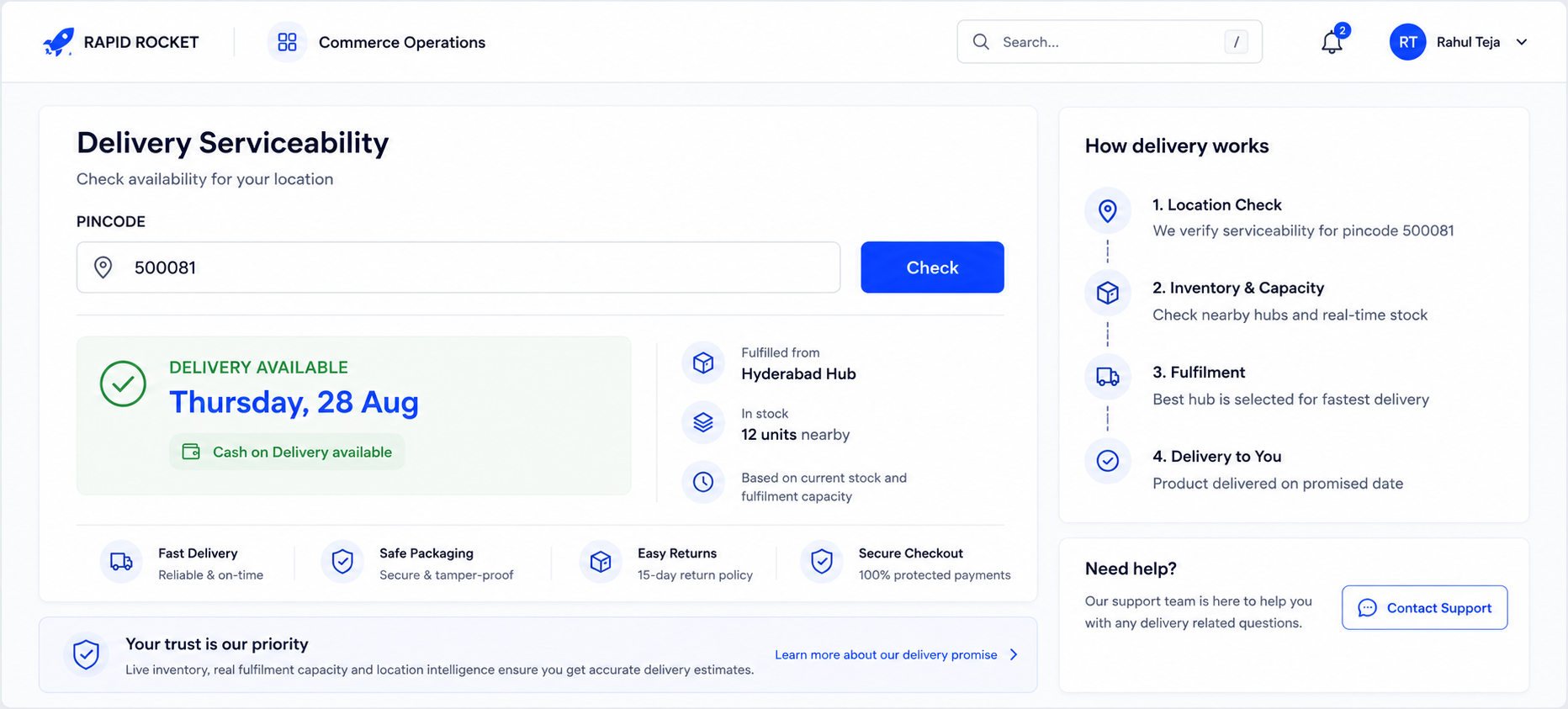
The fix looks small. Let people check their pincode and see a delivery date before they commit. Getting it right is less small than it looks.
Cart abandonment has many causes, and uncertainty is one of the quietest. A customer who isn't sure you deliver to them, or when, doesn't email to ask. They leave. In a market where buyers routinely check several sellers at once, the one that answers "yes, we deliver to you, by Thursday" wins over the one that leaves them wondering.
A pincode check moves that answer to the top of the journey, at the product page, before the customer has invested any effort. It replaces a doubt with a fact, at the exact moment doubt would have cost you the sale.
Why a real ETA is harder than a yes or no
Plenty of tools tell a customer whether a pincode is serviceable. A flat yes or no is easy. A real, trustworthy delivery date is not.
An honest ETA depends on things that change by the hour: whether the item is in stock near that pincode, which fulfilment location would serve it, and what that location can actually promise today. A date that ignores those is worse than no date, because you've now made a promise you might break, and a broken delivery promise costs more trust than a missing one ever would.
A wrong delivery date is more expensive than no date. You've turned a doubt into a broken promise.
Where the live inventory problem bites
This is the part that separates a real serviceability check from a lookup table. To show a date you can stand behind, the check has to read live fulfilment capability at that pincode, not a static list uploaded once and left to rot.
For businesses that fulfil fast from local stock, that means the widget on the product page is quietly talking to the systems that know what's in stock and what can move today. The customer sees one clean line, "delivery by Thursday." Behind it sits a real-time answer, which is the whole reason the line can be trusted.
What good looks like on the page
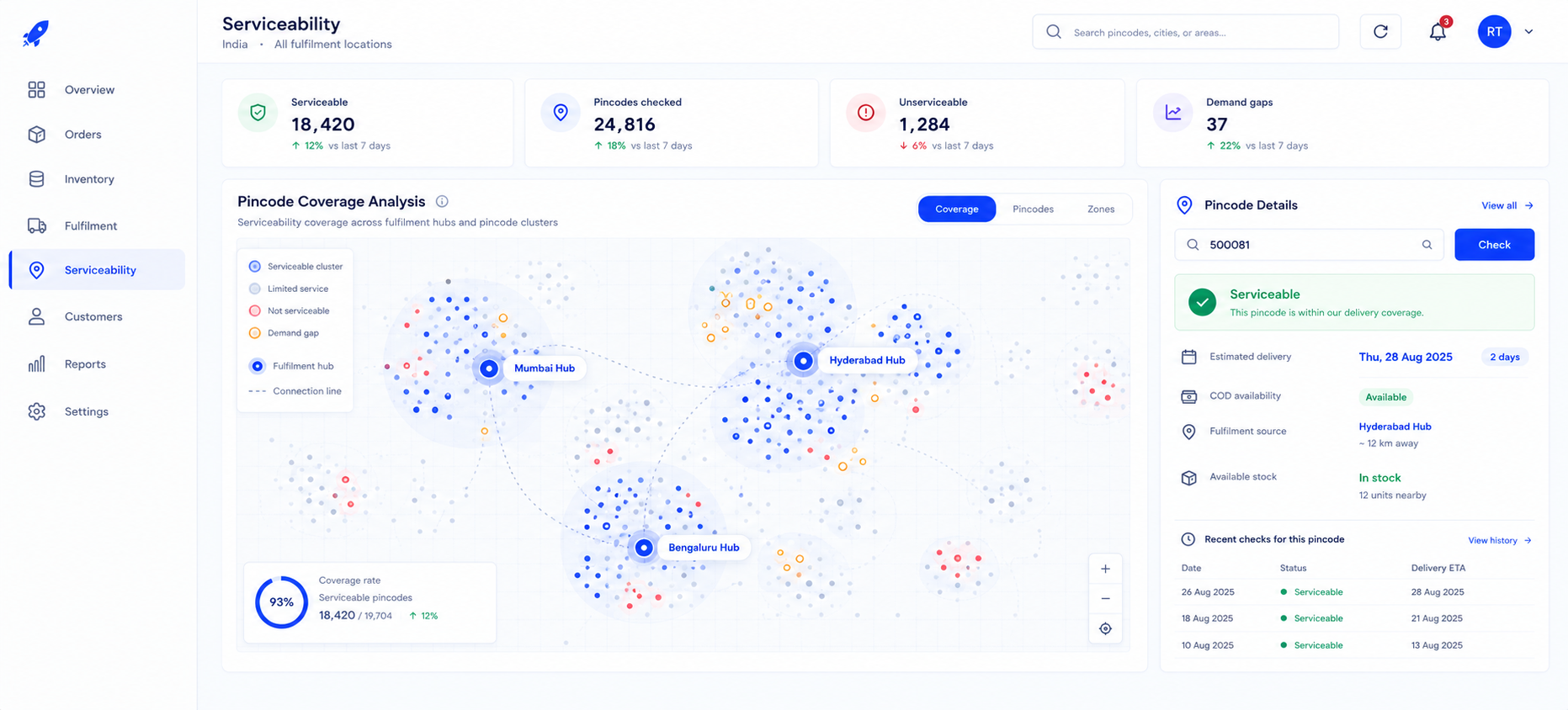
Done well, it disappears into the experience. The customer enters a pincode once, sees a clear delivery date and whether cash on delivery is available, and moves on with the doubt removed. The business gets a config panel to manage it and a record of every pincode customers checked, including the ones it couldn't serve, which is a quiet map of where demand is outrunning coverage.
The bar is simple. If your checkout can't tell a customer when their order will arrive, you're asking them to trust you on faith at the exact moment they're deciding whether to. Most won't. The ones who would have are worth the build.