How to Get One Clear View of Your Whole Delivery Operation
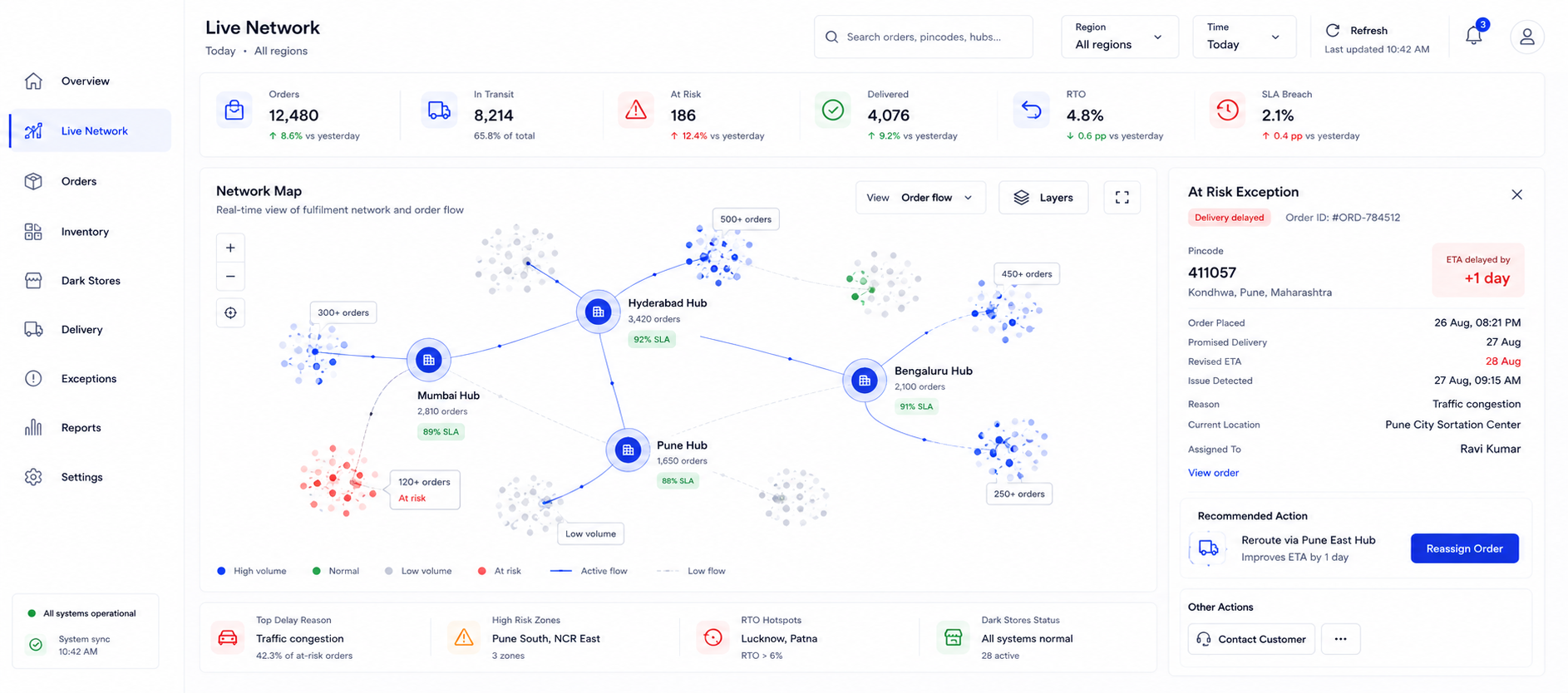
Most last-mile dashboards show you a problem. A control tower connects the view to the levers, so seeing a delay and fixing it happen in the same place.
6 min read • 23 Aug 2026
How to Track Deliveries When GPS, SIM, and Lock Data Disagree
5 min read • 23 Aug 2026A dashboard is not a control tower
The last mile is where logistics gets expensive and where visibility gets thin. Industry estimates put it at roughly 40 to 50 percent of total delivery cost, and in high cash-on-delivery markets like India, a real share of first attempts fail. Yet most operations watch it through a patchwork of vendor dashboards, each showing one slice, none showing the whole.
A dashboard shows you what happened. A control tower is meant to help you do something about it. That sounds like semantics until an order is late and you're clicking between four tools trying to work out why.
Visibility that only reports is overhead. The value lives in connecting the view to a decision, so the same system that surfaces a delay is the one you use to respond to it.
The data has to come together first
Before any of that, the data has to live in one place. In a real operation, inventory sits in one or two systems, transport in another, and every dark store has its own view. A control tower's unglamorous first job is pulling all of it into a single source of truth per order, so inventory, dispatch, and delivery stop being three separate stories about the same package.
Visibility across four vendor dashboards isn't visibility. It's four blind spots you switch between.
Visibility at the right altitude
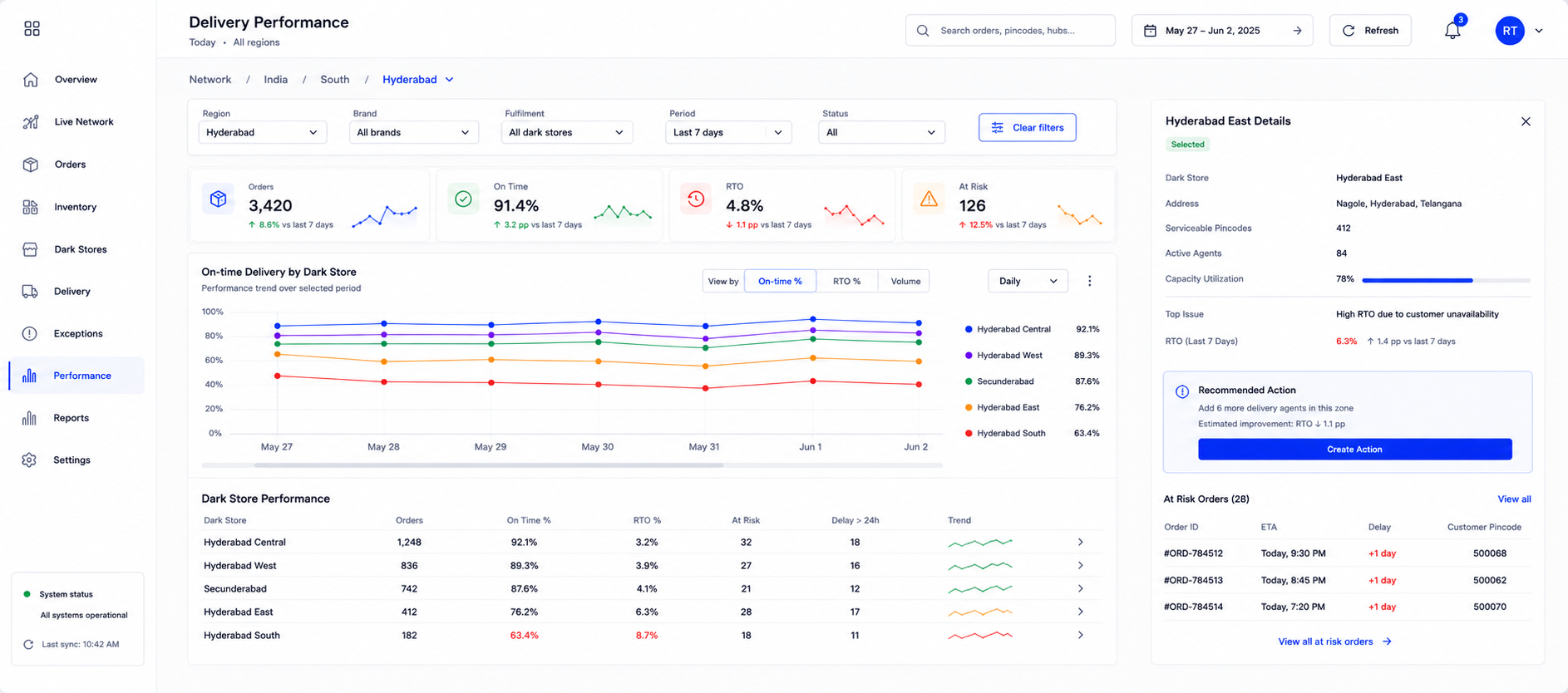
The second job is letting you change altitude. Sometimes you need the one late order. Sometimes you need every order in a single pincode, or one dark store, or one brand across every location. A control tower lets you zoom from the whole network down to a single parcel and back, because the question changes depending on who's asking: your ops team, a client, or you.
What you actually do with it
Once the data is unified and the altitude adjustable, the operational wins follow. You see delivery performance and RTO by brand and by region. You catch exceptions while there's still time to act on them. You stop promising customers what the network can't actually deliver that day.
The dashboard was never the point. Acting on it, before the cost is locked in, is. The test is simple: when something goes wrong in the last mile, does your system just tell you, or does it help you fix it. If it only tells you, you have a dashboard with ambitions. The real work is closing the gap between seeing and doing.