Why Agencies Drown in Ad Dashboards, and How to Get One Clear View
A dozen ad tabs, three platforms, and a client asking why the leads dried up. The fix is one view that tells you where the money's going and what it's returning.
5 min read • 23 Aug 2026
How to Get Your Business Cited by AI (ChatGPT, Perplexity, Google)
6 min read • 23 Aug 2026The tab problem
Every performance agency runs the same fire drill. A client's leads slow down or their cost per lead spikes, and finding out why means opening Meta, then Google, then LinkedIn, then a spreadsheet someone updates by hand, and stitching the story together while the client waits. By the time you have the answer, the budget's already been spent finding it.
The problem isn't the ads. It's that the numbers that decide whether the ads are working live in a dozen different places.
An agency running campaigns across platforms is running its business across platforms too. Each has its own dashboard, its own definitions, its own login. There's no single place that says, across everything, where the money went today and what it brought back.
So the daily reality is tab-hopping, and the monthly reality is a reporting scramble that eats days. Neither is where the value is. The value is in the decisions, and the decisions are buried under the busywork of assembling the picture.
CPL is the number that actually matters
Strip an agency's performance down and one number carries most of the weight: cost per lead. It's the honest measure of whether spend is turning into pipeline. Impressions and clicks are vanity next to it.
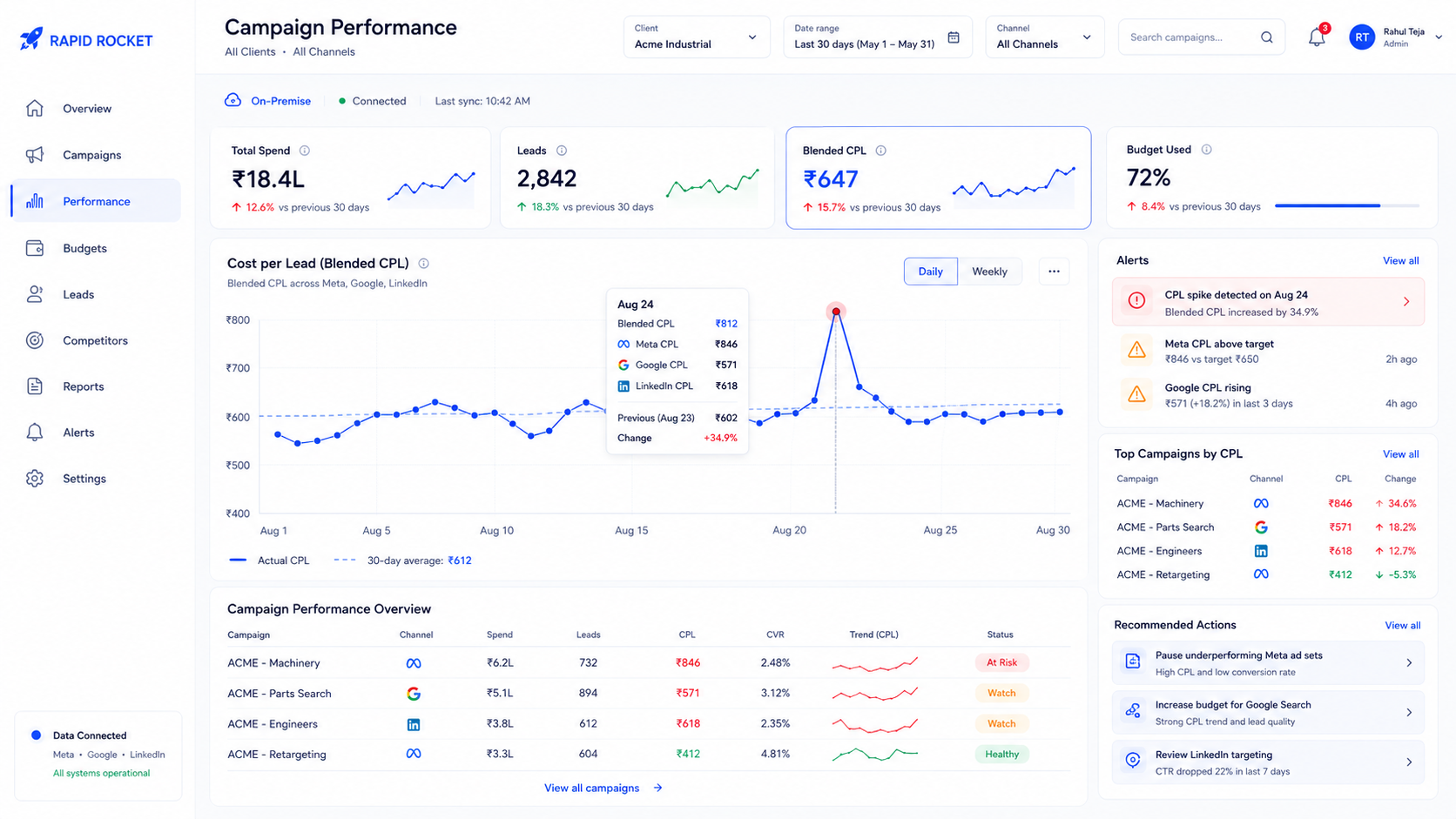
The trouble is that CPL lives across platforms too, and a client doesn't care that Meta's CPL is fine if the blended number is climbing. A single view that computes CPL across every channel, in near real time, is the difference between managing outcomes and reporting on them after the fact.
Impressions are vanity. Cost per lead is the number the client is actually paying you to move.
Catching the spike before it burns budget
The real prize isn't prettier monthly reports. It's speed. When a CPL spikes, every hour it goes unnoticed is budget spent on ads that aren't working. A view that watches CPL across channels and alerts you when it jumps turns a week-later postmortem into a same-day fix.
That's what clients actually pay for, whether they can name it or not: not the report, but the catch. The agency that spots the problem on day one looks like a partner. The one that explains it in the monthly review looks like a vendor.
Competitor ads are data you're ignoring
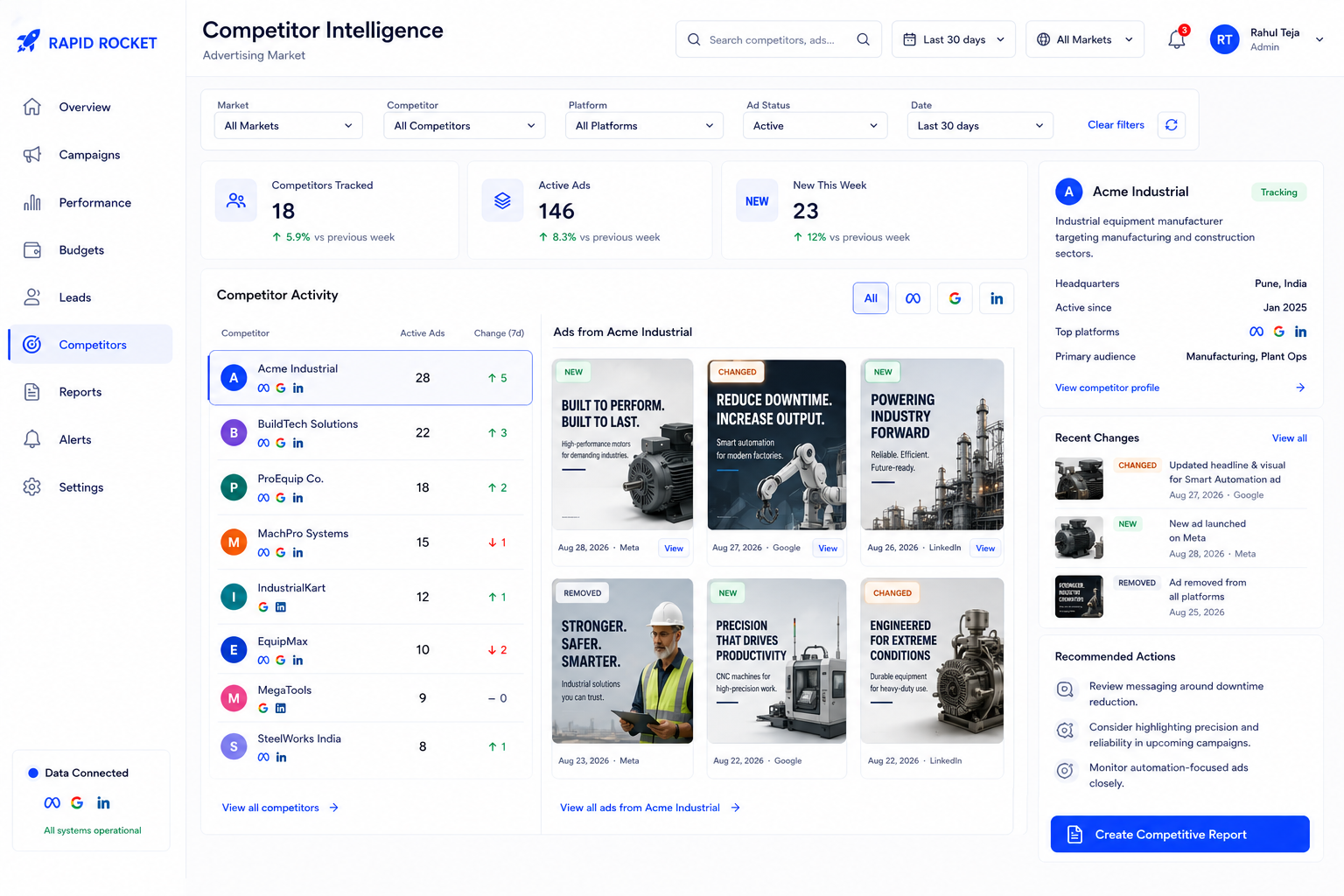
The last piece most agencies leave on the table is the competition. Public ad libraries show you exactly what rivals are running, right now, for free. That's live creative and messaging intelligence, and it usually sits unused because pulling it is one more tab nobody has time for.
Fold it into the same view and you turn it from a chore into an edge. The agencies that win aren't just watching their own numbers. They're watching the market's, and acting on both before the client thinks to ask.